Over the past few years, cryptocurrency has moved from niche online forums into everyday conversations across Africa. From Lagos to Nairobi to Johannesburg, people are exploring Bitcoin, USDT, and other digital assets as alternatives for saving, trading, and even cross-border payments. For beginners, the first big decision is: which crypto wallet should I use?
This guide explains the main types of wallets new users in Africa tend to start with, why they choose them, and what to watch out for in terms of fees, security, and ease of use.
- Why Wallet Choice Matters for African Users
In many African countries, people turn to crypto for three main reasons:
-Protection against currency instability and inflation
-Easier cross-border payments and remittances
-Access to global investment opportunities that are hard to reach via local banks
-Because of this, beginners don’t just need “any” wallet—they need one that:
-Works well with local internet and mobile conditions
-Supports local currencies or easy cash-in/cash-out options
-Keeps funds reasonably safe even if the user is new to crypto - Main Types of Wallets Beginners Use
Most new users in Africa start with one (or a mix) of these:
-Centralized exchange wallets (on-platform wallets)
-Mobile app wallets (non-custodial)
-Web-based browser wallets
-Hardware wallets (less common but growing for higher balances)
-Each type has trade-offs between convenience and security. - Centralized Exchange Wallets: The “Bank-Like” Entry Point
-Many beginners first encounter crypto through centralized exchanges, which function a bit like online banks for digital assets. The exchange creates a wallet for you when you sign up; you can buy, sell, and store coins inside the platform. - Why African beginners like them:
-Easy onboarding: Email, phone number, and ID verification are familiar steps.
-Fiat on-ramps: Some platforms support local currency deposits via bank transfer, card, or mobile money in markets like Nigeria, Kenya, South Africa, Ghana, and others.
-Built-in trading: Users can move from local currency to Bitcoin or stablecoins in a few taps. - Typical beginner use cases:
Buying small amounts of Bitcoin or USDT to hold as a hedge against local currency depreciation
Receiving payments from abroad and converting into local currency
Experimenting with small trades to learn how markets work - Key risks:
You don’t control the private keys—“not your keys, not your coins.” If the exchange is hacked or blocked, your funds are at risk.
Regulatory changes in some African countries can affect how easily you can deposit, withdraw, or trade.
Best practice for beginners:
Use exchange wallets as a starting point and bridge, but move long-term savings to a wallet where you control the keys. - Mobile App Wallets: Crypto in Your Pocket
-Smartphones are the primary internet device for most people across the continent. It’s no surprise that mobile crypto wallets are extremely popular among beginners.
-These apps are typically non-custodial, meaning you control the private keys (sometimes through a recovery phrase). They often support multiple coins and tokens. - Why they’re popular in Africa:
Mobile-first design: Light apps that work well on budget Android phones.
On-the-go access: Ideal for markets, transport, and peer-to-peer transfers.
Multi-currency support: Bitcoin, Ethereum, USDT, and sometimes local currency-pegged stablecoins. - Common beginner scenarios:
-A small business owner accepting crypto payments from international clients
-A freelancer receiving USDT or BTC for online work
-Friends and family sending small amounts of crypto across borders - Things to watch:
-Backup is critical. If a user loses their phone and hasn’t saved the recovery phrase, the funds are gone.
-Scams and fake apps are a real risk; beginners must download wallets only from official app stores and verified developers.
-Fees can be confusing; some networks have high gas fees during busy times. - Best practice for beginners:
Write down the recovery phrase offline (paper, not screenshots), keep it private, and never share it with anyone—even customer support - Web-Based Wallets and Browser Extensions
Some beginners, especially those using laptops for trading or DeFi, experiment with browser-based wallets. These wallets are often used to interact with decentralized applications (DeFi, NFTs, etc.). - Why some African beginners use them:
Access to DeFi lending, staking, and yield products not available via local banks
Ability to connect to decentralized exchanges (DEXs) to swap tokens
Simple interfaces for sending and receiving coins across different chains - Challenges:
Requires more technical understanding than simple exchange apps
Phishing sites and fake browser extensions can steal funds if users click malicious links
Internet connectivity drops during transactions can be stressful for new users - Best practice for beginners:
Start with small amounts, double-check website URLs, and consider using web wallets only after learning the basics of crypto security. - Hardware Wallets: For Larger, Long-Term Holdings
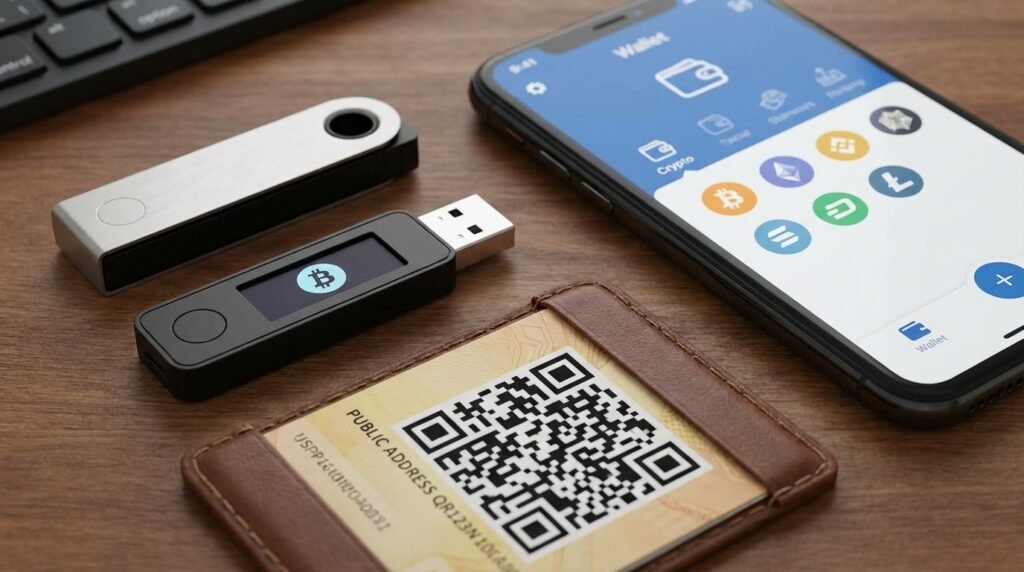
-While not as common among absolute beginners, some users in Africa move to hardware wallets once they start holding larger balances. These are physical devices that store private keys offline.
-Why serious beginners and intermediates move here:
-Strong protection against hacks and malware
-Ideal for long-term savings (e.g., Bitcoin or stablecoins held for years)
-Good for people in regions with frequent device theft, as the hardware wallet can be PIN-protected and backed up with a recovery phrase - Limitations:
-Upfront cost can be high relative to average monthly income in some regions
-Requires careful handling of recovery phrases
-Not as convenient for daily transactions—more suited to “cold storage”
Best practice for beginners:
Only buy hardware wallets from official sources, and never accept a device with a pre-written seed phrase. - What African Beginners Really Need to Know About Wallet Security
Regardless of the wallet type, a few security principles are critical:
Private keys and seed phrases
The seed phrase (12–24 words) is the true key to the wallet.
Anyone with that phrase can take all the funds. It must never be shared or stored in plain text online. - Backups and phone loss
-If a phone or laptop is lost, the wallet can be restored on a new device using the recovery phrase—if it was properly saved.
-Beware of “helpers” and impersonators
-Many scams in African crypto communities involve people pretending to be support staff, asking users to share their seed phrase or one-time codes.
-Legitimate support teams never need your seed phrase.
-Small, gradual learning
-Start with small amounts, practice sending and receiving, then scale up once comfortable. - How Beginners Choose a Wallet in Practice
-When you talk to new crypto users across Africa, their decision often comes down to a few practical questions:
-Can I easily convert between crypto and my local currency?
-Can I use this with my current phone and internet connection?
-Is the interface in a language I understand?
-Do friends or community groups I trust already use this wallet?
-Many users end up with two or more wallets:
-An exchange wallet for buying and selling
-A mobile non-custodial wallet for everyday use
-Possibly a hardware wallet once their holdings grow - Final Thoughts: Start Simple, Learn Constantly
Crypto wallets open important doors for people in Africa—access to global markets, new forms of savings, and faster cross-border payments. But they also come with real risks if users rush in without understanding private keys, backups, and scams.
For beginners, the best approach is:
-Start with simple tools you can understand
-Keep amounts small while you learn
-Gradually move toward wallets where you control the keys
-Treat your recovery phrase like the keys to your home or business
-With patience and good habits, crypto wallets can become powerful tools for financial inclusion and opportunity across the continent.